






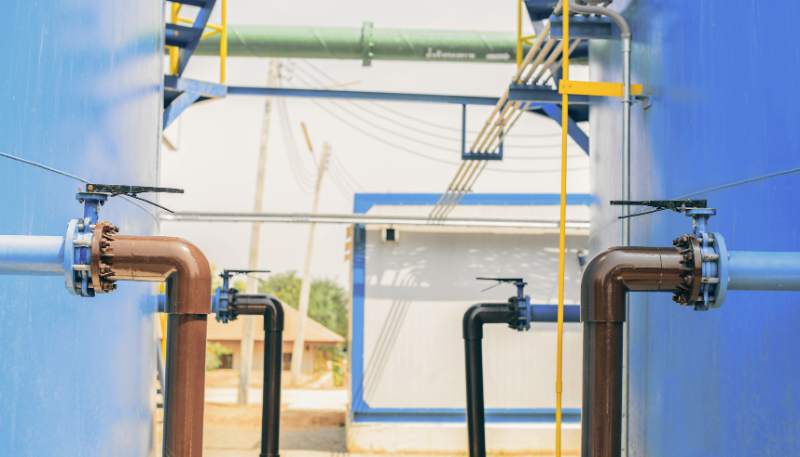
Water treatment and wastewater management facilities depend on well-designed piping systems to move water, chemicals and waste streams safely and efficiently. From municipal water treatment plants to industrial wastewater facilities, every component must perform reliably under its intended operating conditions.
Among these components, flanges play an important role by connecting pipes, valves, pumps, filters and other equipment. They provide secure mechanical connections while allowing sections of the piping system to be disconnected when inspection, maintenance or equipment replacement is required.
Selecting the right flanges for water treatment and wastewater applications can help improve system maintainability, manage corrosion risks and support dependable plant operations.
What Is the Role of Flanges in Water Treatment Systems?
Flanges are mechanical components used to connect piping sections and equipment through bolted joints. A suitable gasket is typically installed between the mating flange faces to help create a leak-resistant seal.
In water treatment plants, flanges are commonly used at connections involving pumps, control valves, filtration equipment, storage tanks and treatment units. They are also used in wastewater piping systems that transport sewage, sludge and industrial effluent.
Their detachable design makes them useful in facilities where equipment requires periodic servicing or where pipeline sections may need to be inspected or replaced.
However, reliable performance depends on selecting compatible flange materials, pressure ratings, dimensions and sealing arrangements for the specific application.
1. Supporting Reliable Connections Across Treatment Equipment
Water treatment plants contain several interconnected processes, including screening, filtration, chemical dosing, pumping and disinfection. Each process relies on piping connections that can accommodate the system’s operating requirements.
Flanges provide connection points between pipes and equipment such as pumps, valves and filters. When correctly selected and installed, these joints help maintain the integrity of the piping network.
For example, a pump connected through flanged joints can be disconnected for servicing without cutting the adjoining pipes. Similarly, a valve can be removed or replaced while preserving the existing pipeline connections, provided the replacement is compatible with the system.
This makes flanges a practical choice for treatment facilities that require accessible equipment connections and planned maintenance.
2. Choosing Corrosion-Resistant Flanges for Water and Wastewater
Corrosion is an important consideration in water treatment and wastewater piping systems. Water chemistry, dissolved salts, treatment chemicals, temperature and exposure to industrial effluent can all influence material performance.
The appropriate flange material depends on the fluid being transported and the surrounding operating environment.
Common options include:
- Stainless steel flanges: Often selected for applications requiring corrosion resistance, subject to the water chemistry, chloride concentration and operating conditions.
- Carbon steel flanges: Used in many industrial and utility piping systems where their mechanical properties and cost are suitable. Protective coatings or other corrosion-control measures may be required.
- Ductile iron flanges: Commonly used in compatible municipal water distribution and wastewater infrastructure.
- Special alloy flanges: Considered for demanding environments where standard materials may not provide adequate resistance to corrosion or chemical attack.
Material selection should account for the entire service environment, including the fluid, gasket, bolts and mating components. No single material is suitable for every water treatment or wastewater application.
3. Managing Leakage Risks in Water and Effluent Pipelines
Leakage in water treatment facilities can lead to water loss, equipment damage, operational disruption and additional maintenance requirements. In wastewater facilities, leaks may also create environmental and hygiene concerns.
Flanged joints are designed to provide sealed connections when the flange faces, gaskets, bolting and installation procedures are appropriate for the application.
Several factors influence their sealing performance:
- Correct flange dimensions and pressure ratings
- Suitable gasket material for the transported fluid
- Proper alignment of mating flange faces
- Compatible bolts and nuts
- Controlled and appropriate bolt tightening
- Regular inspection for corrosion, damage and gasket deterioration
For wastewater systems carrying chemically aggressive fluids or abrasive solids, the selection process may require additional attention to material compatibility and operating conditions.
Routine inspections and appropriate maintenance procedures help identify potential problems before they develop into more significant operational issues.
4. Making Pump, Valve and Filter Maintenance Easier
Water and wastewater treatment plants rely on pumps, valves, filters and other mechanical equipment that require periodic maintenance.
Flanged connections can simplify the removal of these components by providing detachable joints at suitable locations in the piping system.
For example, when a pump requires repair, technicians may be able to disconnect the associated flanged joints and remove the equipment without cutting the connected pipes. Similarly, a damaged valve or filter assembly can be replaced if the existing connections are compatible with the replacement component.
This arrangement can reduce the need for extensive piping modifications and make maintenance planning more manageable.
The actual benefits depend on the system layout, available working space, isolation arrangements and the type of equipment being serviced.
5. Supporting Wastewater and Industrial Effluent Applications
Wastewater systems can present different challenges from clean-water distribution networks. They may handle suspended solids, sludge, corrosive substances and fluctuating operating conditions.
Flanges are used in suitable wastewater piping arrangements to connect pumps, valves, pipe sections and treatment equipment.
In industrial wastewater facilities, the transported effluent may contain acids, alkalis, salts or other chemicals. The flange material, gasket and bolting must therefore be selected according to the chemical composition and operating conditions.
Where abrasive solids are present, engineers should also consider erosion risks, flow conditions and the suitability of the overall piping materials.
Correctly specified flanged connections can support maintainability and reliable equipment integration, but they must form part of a piping system designed for the actual wastewater characteristics.
6. Helping Reduce Maintenance Complexity and Downtime
Unplanned maintenance can interrupt treatment operations and increase operating costs. Although no piping component can eliminate equipment failures, a well-designed piping layout can make maintenance activities easier to manage.
Flanges can help by providing access points for removing equipment, replacing damaged components and modifying selected pipeline sections.
For instance, a facility may be able to replace a compatible valve through its existing flanged connections instead of cutting and rewelding the surrounding pipework. This can reduce the scope of the repair and simplify reinstatement.
Maintenance teams should still follow appropriate isolation, draining, cleaning and safety procedures before opening any joint. After reassembly, the connection must be inspected and tested as required before the system returns to service.
How to Select the Right Flanges for Water Treatment Plants
Choosing suitable flanges requires more than matching pipe diameter. Engineers and procurement teams should evaluate the following factors before purchasing:
7. Operating pressure and temperature: Confirm that the flange rating is suitable for the system’s design conditions.
- Fluid composition: Assess whether the application involves potable water, treated water, seawater, sewage or chemically aggressive industrial effluent.
- Material grade: Select a material that provides suitable mechanical properties and corrosion resistance for the intended service.
- Connection type: Consider the flange design and its compatibility with the connected pipe, valve, pump or other equipment.
- Applicable standards: Verify relevant dimensional, material and pressure-rating requirements. Depending on the application, standards such as ASME B16.5 or AWWA C207 may be relevant.
- Gasket and bolting compatibility: Ensure the sealing and fastening components are appropriate for the fluid, flange design and operating conditions.
- Maintenance requirements: Consider accessibility, inspection frequency and the ease of replacing connected equipment.
Reviewing these factors helps ensure that the selected flanges are suitable for the intended installation rather than relying on size or material grade alone.
Conclusion
Flanges are important components in water treatment and wastewater piping systems because they provide practical connection points for pipes, pumps, valves, filters and other equipment.
When properly specified and installed, they can support reliable connections, simplify equipment maintenance, facilitate component replacement and help manage leakage and corrosion risks.
The right choice depends on the water or wastewater characteristics, operating conditions, applicable standards and maintenance requirements of the facility.
For engineers, plant operators and procurement teams, evaluating these factors during the design and purchasing stages can help build piping systems that are easier to maintain and better suited to long-term service.

